Kang says both sides still back conditions-based transition
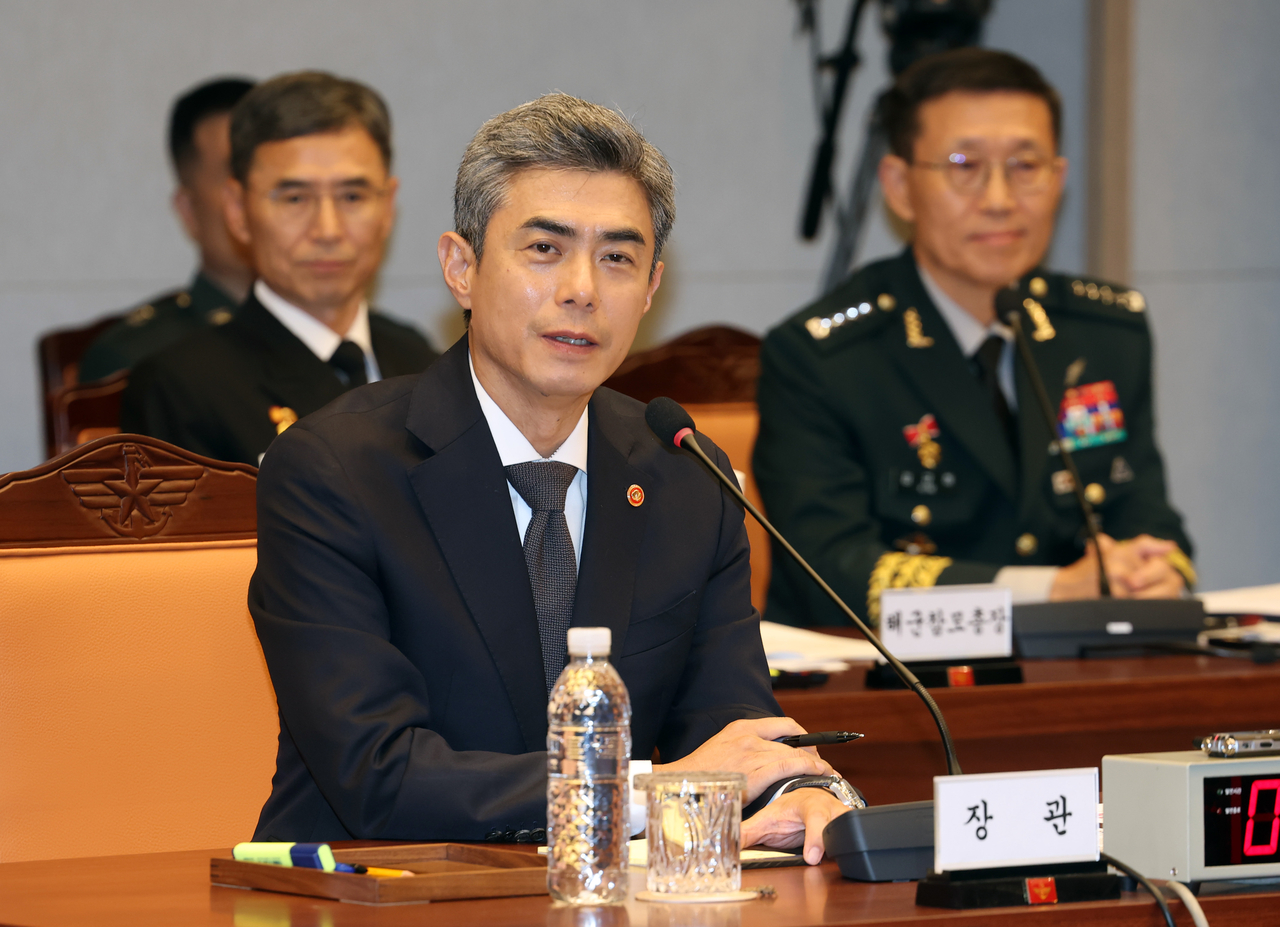
Defense Minister Kang Shin-chul said Thursday that mutual trust between South Korea and the United States is key to the wartime operational control transfer, saying Seoul could assume OPCON "even now without problems."
Kang made the remarks during a National Assembly Legislation and Judiciary Committee audit of the military courts held at the Defense Ministry headquarters in Seoul.
"If the South Korea-US alliance proceeds with the transition with mutual trust guaranteed, it will create an even stronger command structure than we have now," Kang said. "That is why I say there would be no problem even if the transition took place now."
Kang played down perceived differences between Seoul and Washington over the issue, saying both sides remain focused on a conditions-based transition.
"It is difficult for a minister to assess remarks made by a subordinate commander, but Gen. Brunson is also emphasizing a conditions-based approach," Kang said. "I, too, am talking about a conditions-based OPCON transition based on mutual trust."
Kang was responding to a question from Rep. Yoon Sang-hyun of the main opposition People Power Party over concerns that the allies may need to adjust their approach to the OPCON transition, particularly following recent remarks by Gen. Xavier Brunson, commander of US Forces Korea and the South Korea-US Combined Forces Command, which holds wartime operational control.
Earlier Wednesday, Brunson said at a policy forum in Washington that he supports the OPCON transition but opposes moving ahead without meeting required conditions.
"Because the conditions have changed, because we've changed our plan, we have new standards which we have to uphold," Brunson said, pointing to North Korea's missile launch earlier in the week as a recent example of the evolving threat environment.
He went on to caution against transferring OPCON simply to meet a politically sought deadline, in an apparent reference to calls in Seoul to complete the process before 2030, stressing that critical military capabilities and mission readiness must come first.
Kang's remarks align with the Lee Jae Myung administration's push to complete the transfer before Lee's term ends in 2030. The Defense Ministry has also said it will seek to set a target year for the transfer at the next Security Consultative Meeting, the allies' annual defense ministers' talks.
Brunson's comments drew particular attention as they were widely seen as underscoring Washington's emphasis on not rushing the transition and on strictly meeting the agreed conditions.
Earlier Thursday in response to reporters' questions about Brunson's remarks, Defense Ministry spokesperson Chung Binna stressed that the ministry's principle "that wartime operational control will be transferred when the conditions mutually agreed upon by South Korea and the United States are met remains unchanged."
She said the allies have conducted joint assessments this year toward verifying full operational capability, the second of a three-stage process, and would seek to resolve remaining differences by the next Security Consultative Meeting.
Is Seoul rushing OPCON transfer?
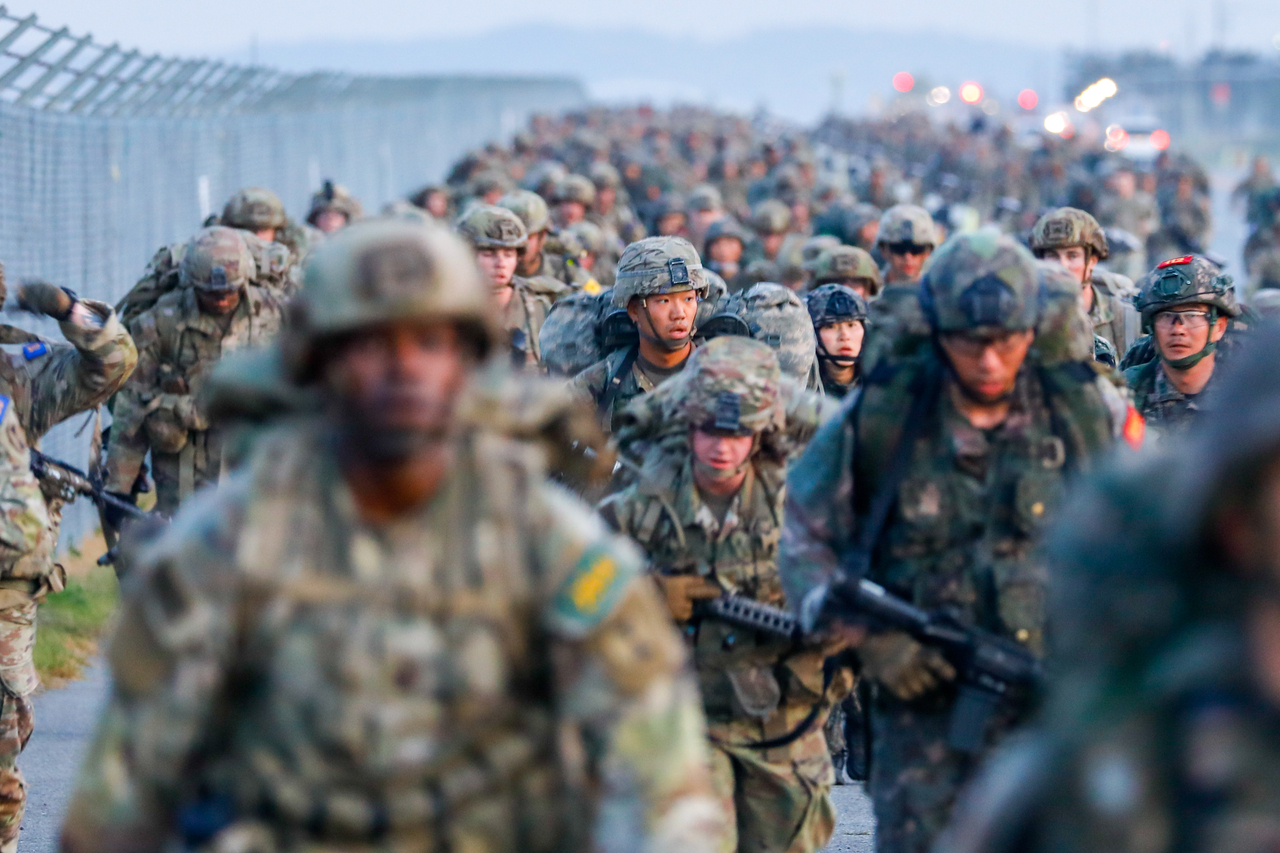
South Korea transferred operational control of its military to the US-led United Nations Command during the 1950-53 Korean War and regained peacetime OPCON in 1994. Wartime OPCON remains with the South Korea-US Combined Forces Command, currently led by an American four-star general.
Seoul has long sought to regain wartime OPCON, with the push gaining renewed momentum under the Lee Jae Myung administration. Washington also has said it supports the transition in principle, but has continued to stress that conditions must first be fully met.
At their 2014 Security Consultative Meeting, the allies agreed to pursue a conditions-based transition and established the Conditions-based OPCON Transition Plan the following year. The plan requires South Korea to demonstrate its ability to lead combined defense and respond to North Korea's nuclear and missile threats, while also taking into account the broader security environment.
The transition consists of three stages: initial operational capability, or IOC; full operational capability, or FOC; and full mission capability, or FMC. IOC was certified in 2019, and the allies are now working to complete FOC verification.
Asked whether his remarks signaled such a change, USFK's public affairs office said the two countries "remain committed to advancing the conditions-based transition of wartime operational control," adding that their defense chiefs reaffirmed at the November 2025 Security Consultative Meeting "the necessity of fulfilling the conditions in the current plan."
A USFK official familiar with the matter also said Brunson's remarks "need to be understood in the broader context."
Doubts over Seoul's defense against Pyongyang
Brunson's emphasis on changing conditions also comes as questions have emerged over whether the allies face a greater threat from North Korea.
According to a local report Wednesday, North Korean forces advanced through South Korean front-line defenses to within several kilometers of Seoul during a computer-simulated scenario in the allies' Ulchi Freedom Shield exercise in August.
The report suggested the outcome exposed shortcomings in South Korea's ability to lead combined wartime operations.
The Joint Chiefs of Staff, however, dismissed the report.
"Military exercises and training, including UFS, are conducted under various challenging scenarios," Navy Capt. Jang Do-young, spokesperson of the JCS, said during a briefing at the Defense Ministry headquarters in Seoul on Thursday.
"The report that Seoul was put at risk because South Korean forces led defensive operations is not true," Jang said, adding that this year's UFS was conducted under the leadership of the Combined Forces Command commander.
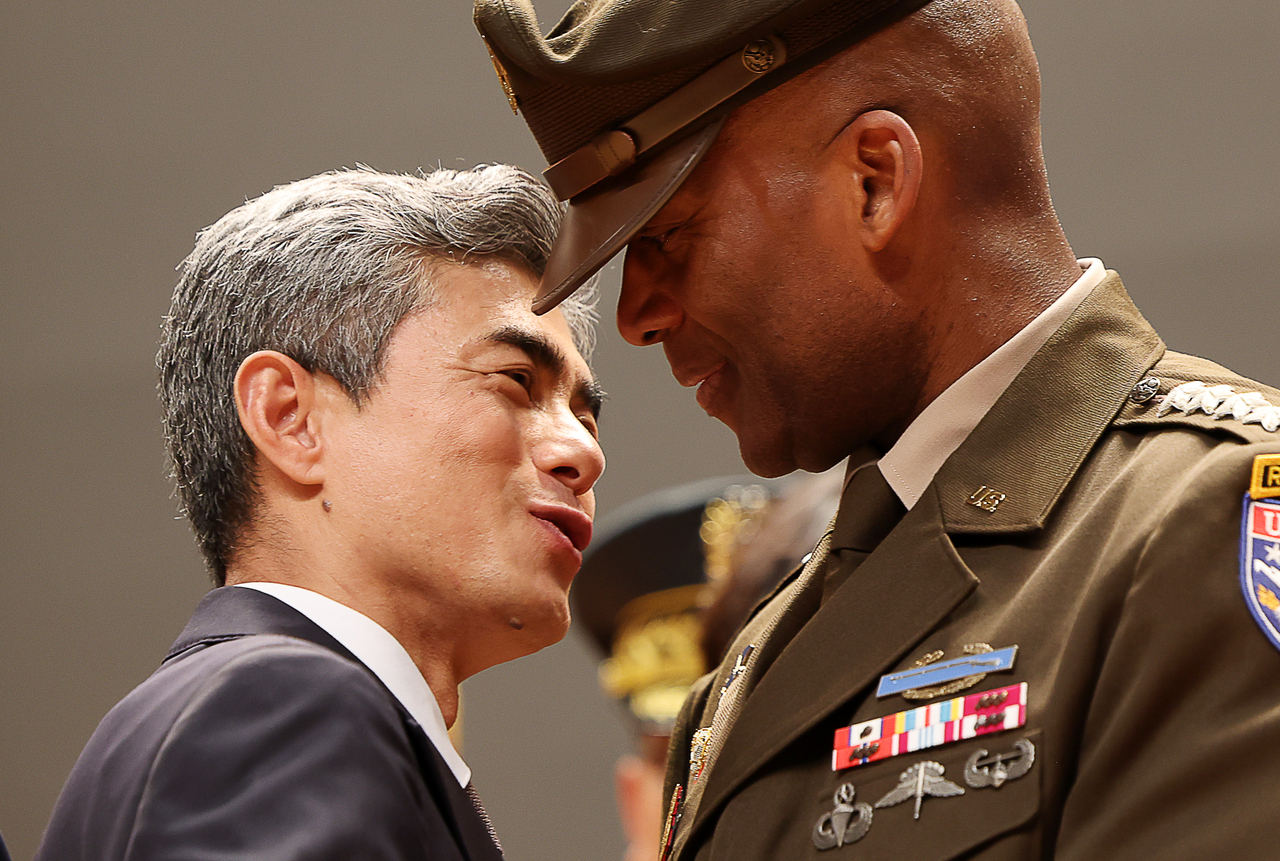
USFK chief also calls for changes to allies' training
Brunson has also recently called for changes in how the allies conduct combined training, pointing to the changing battlefield environment and lessons North Korean troops may be gaining from Russia's war in Ukraine.
Speaking at a US Army event in Washington earlier this week, Brunson questioned the allies' traditional focus on two major exercises each year.
"For a long time, we trained for two big exercises every year," Brunson said. "We've got to move away from that."
"What would happen if we trained in between those exercises?" he added.
Brunson said he has been discussing with South Korean Combined Forces Command Deputy Commander Gen. Kim Sung-min ways to conduct more geographically dispersed operations, including training across areas stretching from Jeju Island to Gyeonggi Province.
His remarks drew attention amid existing concerns over possible reductions in combined training, after this year's Ulchi Freedom Shield exercise was abruptly shortened following an order from US President Donald Trump.
Still, South Korean military officials have said Brunson's remarks should not be interpreted as calling for the existing large-scale command post exercises to be scrapped, but rather as proposing additional distributed training between the regular exercises.
Meanwhile, further high-level discussions on the issue could take place later this month.
Defense Minister Kang Shin-chul is scheduled to attend the Association of Southeast Asian Nations Defense Ministers' Meeting-Plus in the Philippines' Cebu later this month, where he could meet US Defense Secretary Pete Hegseth amid the allies' ongoing discussions over the OPCON transition.
Kang is expected to attend the gathering from around Oct. 27 to 30, with Seoul and Washington coordinating a possible meeting between the two defense chiefs.
If held, it would mark their first face-to-face meeting since Kang took office and could provide an opportunity to discuss their assessments of the OPCON transition conditions.
flylikekite@heraldcorp.com